BUILD A BUNDLESAVE UP TO 10% ON YOUR BASKET TOTAL!
WHAT IS THE BUNDLE BUILDER?
Add a rifle scope to your basket to begin your Bundle Build. Complete your shooting package with mounts and an accessory and enjoy up to 10% off your entire order.
How It Works
1. Add your chosen rifle scope to your basket and the Bundle Builder becomes available.
2. Add a set of mounting rings, save 5%
3. Add an accessory, save 5%
The discounts STACK:
Add just a set of mounting ring? 5% saving
Add just an accessory? 5% saving.
Add both a set of mounting rings and an accessory? 10% saving.
Add anything else to your basket on top of your bundle? 10% saving.
Build With Confidence
Not sure which scope you should get? Unsure about mounts or accessories? No problem.
Just click the green chat icon in the bottom corner to chat with our IRIS AI assistant and start building your bundle with expert guidance.
Add a Rifle Scope to get started
BUILD A BUNDLESAVE UP TO 10% ON YOUR BASKET TOTAL!
WHAT IS THE BUNDLE BUILDER?
Add a rifle scope to your basket to begin your Bundle Build. Complete your shooting package with mounts and an accessory and enjoy up to 10% off your entire order.
How It Works
1. Add your chosen rifle scope to your basket and the Bundle Builder becomes available.
2. Add a set of mounting rings, save 5%
3. Add an accessory, save 5%
The discounts STACK:
Add just a set of mounting ring? 5% saving
Add just an accessory? 5% saving.
Add both a set of mounting rings and an accessory? 10% saving.
Add anything else to your basket on top of your bundle? 10% saving.
Build With Confidence
Not sure which scope you should get? Unsure about mounts or accessories? No problem.
Just click the green chat icon in the bottom corner to chat with our IRIS AI assistant and start building your bundle with expert guidance.
Add a Rifle Scope to get started
CHOOSING THE RIGHT MOUNTING RINGS
Now that you’ve chosen your rifle scope, the next step is selecting the correct mounting rings. This is just as important as choosing the scope itself as the wrong rings simply won’t fit, and even the best scope won’t perform properly if mounted incorrectly.
There are three key things you must match correctly:
- Tube diameter
- Rail type
- Mount height
Get these right and your setup will be solid, aligned and reliable from day one.
1. Tube Diameter (Most Important)
Your mounting rings must match the diameter of your scope tube.
- 1 inch (25.4mm)
- 30mm
- 34mm
These are not interchangeable. Always check your scope specifications before choosing rings.
2. Rail Type (What Your Rifle Has)
You must match the mounting system on your rifle.
- 11mm Dovetail Rail – Most common on UK air rifles.
- Picatinny Rail – Wider, squared rail system often found on tactical-style rifles.
Dovetail and Picatinny mounts are completely different and are not interchangeable. Always check your rifle’s rail type before choosing.
3. Mount Height
Mount height determines how high your scope sits above the rifle.
- Low
- Medium
- High
The correct height depends on your objective lens size (40mm, 44mm, 50mm etc.), magazine clearance and personal preference. For most air rifle setups with 40–44mm objectives, medium mounts are usually ideal.
One-Piece vs Two-Piece Mounts
Two-piece mounts are the most common and work perfectly for most air rifles.
One-piece mounts offer additional rigidity and can be particularly useful on spring-powered rifles due to their double recoil. Many one-piece mounts also include a recoil stop pin for added security.
For spring rifles especially, a mount with a recoil stop is highly recommended.
function toggleCollapspixie_collapse_458546181() { document.querySelector(".pixie_collapse_458546181").classList.toggle("opened"); }
Spring vs PCP Considerations
Spring-powered air rifles produce both forward and rearward recoil. This can cause mounts to creep backwards over time.
If you are using a spring rifle, look for:
- A recoil stop pin
- A solid clamping system
- Strong build quality
PCP rifles are far less demanding on mounts.
function toggleCollapspixie_collapse_1345416259() { document.querySelector(".pixie_collapse_1345416259").classList.toggle("opened"); }
FAQ – Mounting Rings
What size rings do I need? Match the ring size to your scope tube - 1 inch, 30mm and 34mm are most common.
How do I know if my rifle is dovetail or Picatinny? Most traditional UK air rifles use 11mm dovetail rails. Tactical-style rifles may use Picatinny. Check your rifle specifications if unsure.
Do I need high mounts? Only if you have a large objective lens or clearance issues. Medium mounts suit most air rifle scopes.
Can I use adapters? Dovetail-to-Picatinny adapters exist, but using the correct mount for your rail is always preferable.
What happens if I choose the wrong rings? They simply won’t fit properly. Tube diameter and rail type must match exactly.
function toggleCollapspixie_collapse_2015354855() { document.querySelector(".pixie_collapse_2015354855").classList.toggle("opened"); }
If you’re unsure, our Iris AI can recommend the correct mounting rings for your rifle and scope combination, ensuring everything fits perfectly from the start.
+ RINGS
Save3%
CHOOSING THE RIGHT ACCESSORIES
Now that your rifle scope and mounting rings are sorted, it’s time to complete your setup with the right accessories.
Accessories aren’t just add-ons, they protect your investment, improve accuracy, make transport easier and ensure you can shoot consistently and safely.
The key is choosing what suits how and where you shoot.
BAGS, CASES AND SLINGS
Protecting your rifle is essential, especially when transporting it.
- Padded rifle bags or hard cases for safe storage
- Secure zips and reinforced stitching
- Correct internal length for your rifle
- Sling attachment points if needed
A quality bag protects your investment, while slings make carrying your rifle more comfortable during pest control or longer sessions outdoors.
function toggleCollapspixie_collapse_617253588() { document.querySelector(".pixie_collapse_617253588").classList.toggle("opened"); }
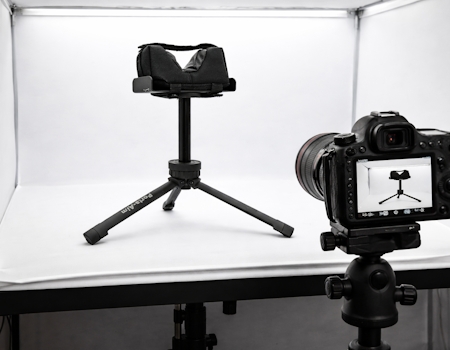
BIPODS, TRIPODS, RESTS AND BAGS
Stability equals accuracy.
Bipods & Tripods
- Height adjustment range
- Weight and portability
- Attachment method (stud mount, Picatinny etc.)
- Whether you prioritise compactness or maximum stability
Tripods offer excellent stability for varied distances. Bipods are lighter and more compact.
Shooting Rests & Bags
- Sand-filled or adjustable rests
- Front and rear bag combinations
- Stable base for consistent grouping
Ideal for bench shooting, zeroing and improving consistency.
function toggleCollapspixie_collapse_1399823179() { document.querySelector(".pixie_collapse_1399823179").classList.toggle("opened"); }
CHARGING EQUIPMENT (For PCP Rifles)
If you’re using a PCP air rifle, you’ll need a charging solution.
Compressors
- Convenient for home use
- Ideal for frequent shooters
- Faster refill times
Pumps
- Budget-friendly option
- Physically demanding
- Best for occasional use
Choose based on how often you shoot and how convenient you want refilling to be.
function toggleCollapspixie_collapse_1586337236() { document.querySelector(".pixie_collapse_1586337236").classList.toggle("opened"); }
PELLETS
Your pellet choice affects accuracy more than most people realise.
- .177 – Flatter trajectory, popular for target shooting
- .22 – Larger pellet, often preferred for pest control
Every rifle prefers different pellet brands, so testing a few types is recommended to find the most accurate option for your setup.
function toggleCollapspixie_collapse_1396724557() { document.querySelector(".pixie_collapse_1396724557").classList.toggle("opened"); }
TARGETS
Targets help you practise and improve.
- Paper targets for precision and grouping
- Metal knockdown targets for reactive shooting
- Sticker targets for high visibility
If you’re zeroing your rifle, paper targets are essential.
function toggleCollapspixie_collapse_1618722425() { document.querySelector(".pixie_collapse_1618722425").classList.toggle("opened"); }
CLEANING TOOLS
Keeping your barrel clean helps maintain accuracy.
Air rifles don’t require constant cleaning, but periodic maintenance improves consistency and performance.
function toggleCollapspixie_collapse_1888967040() { document.querySelector(".pixie_collapse_1888967040").classList.toggle("opened"); }
BUBBLE LEVELS
A small accessory that can make a big difference.
Bubble levels attach to your scope and help prevent rifle cant (tilting). Even slight cant can shift your point of impact at longer air rifle distances.
Especially useful for target shooters and anyone stretching beyond 35–40 yards.
function toggleCollapspixie_collapse_38327679() { document.querySelector(".pixie_collapse_38327679").classList.toggle("opened"); }
FAQ – Accessories
What accessories do I actually need to start? A good rifle bag, quality pellets and safe charging equipment (for PCP rifles) are the essentials.
Do I need a bipod? Not essential, but it improves stability, especially for pest control or zeroing.
Is a compressor better than a pump? For regular PCP shooting, yes. Pumps are more affordable but require physical effort.
How important are pellets? Extremely. Pellet choice can dramatically affect grouping and consistency.
Do I need cleaning tools straight away? Not immediately, but they are worth having for periodic maintenance.
function toggleCollapspixie_collapse_1670897150() { document.querySelector(".pixie_collapse_1670897150").classList.toggle("opened"); }
If you’re unsure, Iris AI can help recommend the right accessories to complete your setup with confidence.
draco test blog
Pixfra DRACO Multispectrum Binoculars: D225 / D335 / D635
DRACO is a true 4-in-1 multispectral binocular platform combining thermal imaging, 4K digital day/night vision,
a built-in laser rangefinder, and detachable IR illumination — designed to give fast detection, confident identification,
and accurate ranging from a single handheld unit.
/* ===== DRACO BLOG STYLE (self-contained) ===== */
.draco-blog{font-family:system-ui,-apple-system,Segoe UI,Roboto,Ubuntu,Cantarell,Noto Sans,sans-serif;color:#0f172a;}
.draco-blog *{box-sizing:border-box;}
.draco-blog .wrap{max-width:1300px;margin:0 auto;padding:16px;}
@media (max-width: 640px){ .draco-blog .wrap{padding:12px;} }
/* Typography */
.draco-blog h1{margin:0 0 10px;font-size:26px;letter-spacing:-.02em;line-height:1.2;}
.draco-blog h2{margin:22px 0 10px;font-size:18px;letter-spacing:-.01em;line-height:1.25;}
.draco-blog h3{margin:18px 0 10px;font-size:16px;line-height:1.3;}
.draco-blog p{margin:10px 0;line-height:1.75;color:#0f172a;}
.draco-blog .muted{color:#475569;}
.draco-blog hr{border:0;border-top:1px solid #e5e7eb;margin:18px 0;}
/* Simple containers */
.draco-blog .box{border:1px solid #e5e7eb;border-radius:12px;padding:14px;background:#fff;}
.draco-blog .note{border-left:3px solid #0f172a;padding-left:12px;margin:12px 0;}
.draco-blog .pillrow{display:flex;flex-wrap:wrap;gap:8px;margin:12px 0 0;}
.draco-blog .pill{
display:inline-flex;align-items:center;
padding:6px 10px;border-radius:999px;font-size:12.5px;
border:1px solid #e5e7eb;background:#fff;color:#0f172a;
white-space:nowrap;
}
.draco-blog .pill b{font-weight:700;}
/* Lists */
.draco-blog ul{margin:10px 0 0;padding-left:18px;line-height:1.75;}
.draco-blog li{margin:6px 0;}
/* KPI (simple, no cards) */
.draco-blog .kpi{display:grid;gap:10px;margin:10px 0 0;}
@media(min-width: 760px){ .draco-blog .kpi{grid-template-columns:repeat(2,1fr);} }
.draco-blog .kpi .item{padding:10px;border:1px solid #e5e7eb;border-radius:10px;background:#fff;}
.draco-blog .kpi .label{font-size:12px;color:#64748b;margin-bottom:6px;}
.draco-blog .kpi .value{font-size:14px;font-weight:700;color:#0f172a;line-height:1.45;}
/* Spec grid */
.draco-blog .specgrid{display:grid;gap:10px;grid-template-columns:1fr;margin-top:10px;}
@media(min-width: 760px){ .draco-blog .specgrid{grid-template-columns:repeat(2,1fr);} }
.draco-blog .spec{padding:10px;border:1px solid #e5e7eb;border-radius:10px;background:#fff;}
.draco-blog .spec .t{font-size:12px;color:#64748b;margin-bottom:6px;}
.draco-blog .spec .v{font-size:13.5px;font-weight:700;line-height:1.45;}
/* Pros/Cons */
.draco-blog .twocol{display:grid;gap:12px;margin-top:10px;}
@media(min-width: 900px){ .draco-blog .twocol{grid-template-columns:1fr 1fr;} }
.draco-blog .pc{border:1px solid #e5e7eb;border-radius:12px;padding:12px;background:#fff;}
.draco-blog .pc .head{display:flex;align-items:center;justify-content:space-between;gap:10px;margin-bottom:6px;}
.draco-blog .pc .title{font-weight:900;}
.draco-blog .pc .sub{font-size:12.5px;color:#475569;}
.draco-blog .pc ul{margin-top:6px;}
/* Comparison table */
.draco-blog .table-wrap{margin-top:12px;border:1px solid #e5e7eb;border-radius:12px;overflow:hidden;background:#fff;}
.draco-blog .table-scroll{overflow:auto;-webkit-overflow-scrolling:touch;}
.draco-blog table{width:100%;border-collapse:separate;border-spacing:0;min-width:980px;}
.draco-blog th,.draco-blog td{
padding:10px 12px;border-bottom:1px solid #e5e7eb;vertical-align:top;
font-size:13px;line-height:1.5;background:#fff;color:#0f172a;
}
.draco-blog th{
background:#f8fafc;font-size:12px;text-transform:uppercase;letter-spacing:.05em;color:#334155;
position:sticky;top:0;z-index:1;
}
.draco-blog td:first-child,.draco-blog th:first-child{
font-weight:800;min-width:240px;border-right:1px solid #e5e7eb;
position:sticky;left:0;z-index:2;background:#fff;
}
.draco-blog tr:nth-child(even) td{background:#fcfcfd;}
.draco-blog tr:nth-child(even) td:first-child{background:#fcfcfd;}
.draco-blog .hl{font-weight:900;}
/* Simple buttons */
.draco-blog .btnrow{display:flex;flex-wrap:wrap;gap:10px;margin-top:12px;}
.draco-blog .btn{
display:inline-flex;align-items:center;justify-content:center;
padding:9px 12px;border-radius:10px;border:1px solid #0f172a;
background:#0f172a;color:#fff;font-weight:800;font-size:13px;cursor:pointer;
}
.draco-blog .btn.secondary{background:#fff;color:#0f172a;}
/* Mobile table hint */
.draco-blog .fine{font-size:12px;color:#64748b;margin:8px 0 0;}
Jump to comparison
Explore models
What makes DRACO different
DRACO is built around a simple field workflow: detect (thermal), identify (4K digital), and measure distance (LRF)
— without swapping devices or breaking observation.
Thermal sensitivity
High-sensitivity detectors (NETD down to ≤15mK on D335/D635)
4K digital channel
1/1.8" CMOS 3840×2160 for day + night observation
Rangefinding
Integrated Class 1 LRF up to 1000m (±1m stated)
Field usability
EIS + defog + menu memory + binocular-style wheel controls
Ergonomic ~600g-class body for comfortable handheld use, with a familiar binocular-style control wheel.
Immersive two-eye viewing via a 0.49" Full HD OLED display and curved UI layout for a natural observation field.
PIPS 3.0 AI image processing to enhance clarity and consistency in both thermal and digital channels.
Detachable IR illuminator (850nm / 940nm options) to extend digital night viewing in very low light.
Dual-band Wi-Fi + 64GB storage for streaming, sharing, and recording photos/videos.
Flexible power: removable 18650 batteries, USB-C charging, power bank support, and single-battery operation.
Quick pick
D225 = most approachable • D335 = best all-round thermal step-up • D635 = premium thermal detail + wider scan
Best for
DRACO is designed to improve situational awareness across day, dusk and darkness — in open terrain, woodland, and poor visibility.
Ideal use cases:
Outdoor exploration • Hunting • Wildlife/animal observation • Security & surveillance • Night-time property checks
How to think about the three models
D225: compact entry into multispectral; great for closer to mid-range thermal needs and strong 4K ID.
D335: the thermal “workhorse” step-up; stronger thermal resolution and reach for mixed terrain.
D635: premium thermal detail and wider thermal field of view; best for scanning and confident long-range observation.
Tip: Use thermal to find heat quickly, then switch to 4K digital to identify detail/behaviour, and confirm distance with LRF.
Model breakdown
All DRACO models share the same core concept and handling. The key differences are thermal sensor resolution,
thermal lens configuration / field of view, and the overall balance of scan speed vs detail.
D225
D225 overview: The most approachable DRACO model — combining thermal detection, crisp 4K digital day/night viewing,
LRF to 1000m, and detachable IR illumination in a compact, ergonomic chassis.
Thermal sensor256×192 VOx, 12µm, ≤18mK
Thermal lens25mm f/0.9 (manual focus)
Thermal FOV @ 100m12.2m × 9.3m
Thermal magnification4.3× base • 1–8× digital zoom (up to 34.4× stated)
Thermal detection range≈1300m
Digital sensor1/1.8" CMOS 4K (3840×2160)
Digital lens55mm f/2.0 (manual focus)
Digital FOV @ 100m14.0m × 8.8m
Digital magnification5.5× optical • 1–8× digital (to 44×)
Display0.49" OLED • 1920×1080
LRFUp to 1000m • ±1m • Class 1
IR illuminatorDetachable 850nm / 940nm options (range stated up to ~400m with IR depending on conditions)
Power & runtimeRemovable 18650 • ≈9 hours (25°C, Wi-Fi off stated)
Storage / connectivity64GB internal • Dual-band Wi-Fi 2.4/5GHz • USB-C
Build & ratingMagnesium alloy housing • IP67 • 195 × 130.6 × 61.7mm • ~0.61kg
D225 — Pros
Best value entry to multispectral
Most approachable DRACO model for stepping into thermal + 4K digital + LRF.
Strong 4K digital channel for identification in daylight and low light.
Compact handling with binocular-style controls for easy use in the field.
Full platform features: EIS, defog, PIPS 3.0, dual-band Wi-Fi, 64GB recording.
D225 — Cons
Trade-offs vs higher models
Lower thermal resolution than D335/D635, so fine thermal detail is reduced at distance.
Narrower thermal performance headroom for demanding long-range scanning compared to higher-tier sensors.
Recommended for: hunters and wildlife watchers who want an all-in-one device for detection + ID + ranging,
with the most accessible thermal spec in the range. Great for mixed woodland/farmland, night property checks,
and anyone prioritising compact versatility.
D335
D335 overview: The DRACO “workhorse” — a major step-up in thermal performance while keeping the same compact chassis
and full feature set. Built for users who want stronger thermal reach and clarity for real-world mixed terrain.
Thermal sensor384×288 VOx, 12µm, ≤15mK
Thermal lens35mm f/0.95 (manual focus)
Thermal FOV @ 100m13.7m × 10.3m (7.5° × 5.6° stated)
Thermal magnification3.8× base • 1–8× digital (up to 30.4× stated)
Thermal detection range≈1800m
Digital sensor1/1.8" CMOS 4K (3840×2160)
Digital lens55mm f/2.0
Digital FOV @ 100m14.0m × 8.8m
Digital magnification5.5× optical • 1–8× digital (to 44×)
Display0.49" OLED • 1920×1080 • 18× ocular magnification stated
LRFUp to 1000m • ±1m stated
IR illuminatorDetachable 850nm / 940nm variants
Power & runtime2× 18650 removable • ≈8 hours (25°C, Wi-Fi off stated) • can run on single battery
Storage / connectivity64GB internal • Dual-band Wi-Fi 2.4/5GHz • App streaming
Build & ratingMagnesium alloy • IP67 • 195 × 130.6 × 61.7mm • ~0.62kg
D335 — Pros
Best all-rounder in the range
Big thermal upgrade over D225: higher resolution + ≤15mK sensitivity for clearer thermal layers.
Excellent balance of scan capability and usable magnification for farmland/woodland/open hill work.
Keeps the same 4K digital channel for identification and evidence capture.
Full platform toolkit: PIPS 3.0, EIS, defog, menu memory, dual-band Wi-Fi, 64GB.
D335 — Cons
Where the D635 pulls ahead
Not as “fine detail” rich as a 640-class thermal sensor (D635) when pushing distance/identification.
Thermal field of view is narrower than the D635’s wider scan window.
Recommended for: the majority of serious users — hunting, wildlife management, security patrols and night operations —
where you want a notable thermal performance step-up while keeping the compact binocular form factor.
D635
D635 overview: The premium DRACO model — highest thermal resolution in the range and a wider thermal field of view,
built for fast scanning and confident detail where clarity matters most.
Thermal sensor640×512 VOx, 12µm, ≤15mK
Thermal lens35mm f/1.0
Thermal FOV @ 100m21.9m × 17.6m (12.52° × 10.0° stated)
Thermal magnification2.5× base • 1–8× digital (to ~20× stated)
Thermal detection range≈1800m
Digital sensor1/1.8" CMOS 4K (3840×2160)
Digital lens55mm f/2.0
Digital FOV @ 100m14.0m × 8.8m
Digital magnification5.5× optical • 1–8× digital (to 44×)
Display0.49" OLED • 1920×1080 • curved UI for natural viewing
LRFUp to 1000m • ±1m stated
IR illuminatorDetachable 850nm / 940nm
Power & runtimeRemovable 18650 • ≈8 hours (25°C, Wi-Fi off stated) • USB-C / power bank support
Storage / connectivity64GB internal • Dual-band Wi-Fi 2.4/5GHz • App streaming
Fit & adjustmentInterpupillary 60–74mm • Diopter −5D to +5D • foldable eyecups
Build & ratingMagnesium alloy • IP67 • 195 × 130.6 × 61.7mm • ~0.62kg
D635 — Pros
Premium thermal detail + scan
Highest thermal resolution in the DRACO line for richer detail and more confident observation.
Wider thermal field of view makes scanning large areas faster and more comfortable.
≤15mK sensitivity + PIPS 3.0 helps maintain clarity in haze, fog and poor weather.
Full multispectral toolset: 4K digital ID + LRF + IR illuminator + recording/streaming.
D635 — Cons
Most premium choice
Higher-spec thermal comes at a higher investment than D225/D335.
Lower base thermal magnification prioritises scanning and situational awareness over a “zoomed-in” starting view.
Recommended for: users who prioritise thermal image quality and fast, wide-area scanning —
open ground, coastal, hill, large farmland, professional observation and security work where detail and clarity are key.
Full specification comparison
This table highlights the practical differences that matter: thermal sensor & lens, field of view, magnification behaviour,
detection range, and the shared platform features across the DRACO range.
Tip: On mobile, swipe left/right. The left column stays fixed for easy comparison.
Specification
D225
D335
D635
Positioning
Most approachable multispectral entry
Best all-round workhorse
Premium thermal detail + wider scan
Thermal sensor
256×192 VOx • 12µm • ≤18mK
384×288 VOx • 12µm • ≤15mK
640×512 VOx • 12µm • ≤15mK
Thermal lens
25mm f/0.9 (manual focus)
35mm f/0.95 (manual focus)
35mm f/1.0
Thermal FOV @ 100m
12.2m × 9.3m
13.7m × 10.3m
21.9m × 17.6m
Thermal base magnification
4.3×
3.8×
2.5×
Thermal digital zoom
1–8×
1–8×
1–8×
Thermal magnification range (stated)
4.3× – 34.4×
3.8× – 30.4×
2.5× – ~20×
Thermal detection range (stated)
≈1300m
≈1800m
≈1800m
Digital sensor
1/1.8" CMOS • 4K 3840×2160 (day/night)
Digital lens
55mm f/2.0 (manual focus stated on D225)
Digital FOV @ 100m
14.0m × 8.8m
Digital magnification
5.5× optical • 1–8× digital (to 44×)
Display
0.49" OLED • 1920×1080 • binocular-style viewing
Image processing
PIPS 3.0 AI enhancement
Stability features
Electronic Image Stabilisation (EIS) • Defog mode • Menu memory
Thermal palettes
White Hot • Black Hot • Iron Red • Alarm • Green Hot • Sepia
Digital modes
Colour • Black & White • Green • Yellow • Auto
Laser rangefinder
Integrated LRF • up to 1000m • ±1m stated (Class 1 referenced)
IR illuminator
Detachable 850/940nm options (850nm referenced)
Detachable 850nm / 940nm
Detachable 850nm / 940nm
Storage
64GB internal (photo/video recording)
Wi-Fi
Dual-band 2.4GHz + 5GHz (App streaming/transfer)
Power
Removable 18650 • dual battery (can run single)
2× 18650 removable • can run single
Removable 18650
Runtime (stated)
≈9 hours
≈8 hours
≈8 hours
Dimensions
195 × 130.6 × 61.7 mm
Weight
~0.61 kg
~0.62 kg
~0.62 kg
Protection rating
IP67
IP67
IP67
Fit adjustments
Interpupillary 60–74mm • foldable eyecups
Interpupillary 60–74mm • foldable eyecups
Interpupillary 60–74mm • diopter −5D to +5D
Choosing the right DRACO
If you’re deciding between models, focus on two questions:
(1) how much thermal detail do you need? and (2) do you prefer scanning wider or starting more “zoomed in”?
You want the most accessible route into a multispectral binocular without giving up the key benefits of the platform:
4K digital ID, LRF, detachable IR and recording/streaming. You’ll still get strong thermal detection, but with a smaller sensor than the step-up models.
You want the best balance of thermal performance and cost. The 384×288 sensor and ≤15mK sensitivity are a meaningful real-world upgrade,
making this the most broadly suited option for hunters, wildlife managers and security users.
You want premium thermal detail and the widest thermal scan window for covering ground quickly. If you spend lots of time scanning open areas
(hill, coastal, large farmland) and you value rich thermal information, the 640-class sensor is the standout.
One-line recommendations
D225: approachable multispectral all-rounder •
D335: best all-round thermal upgrade •
D635: premium thermal detail + wide scan
Back to top
(function(){
const root = document.getElementById('draco-guide');
if(!root) return;
root.querySelectorAll('[data-scroll]').forEach(btn=>{
btn.addEventListener('click', ()=>{
const sel = btn.getAttribute('data-scroll');
const el = document.querySelector(sel);
if(el) el.scrollIntoView({behavior:'smooth', block:'start'});
});
});
})();
READ ARTICLE
emily test blog
.custom-blog-wrapper {
max-width: 100%;
margin: 0 auto;
padding: 1em;
font-family: inherit;
}
.custom-blog-wrapper h3,
.custom-blog-wrapper p {
text-align: center;
line-height: 1.6;
}
.custom-blog-wrapper img {
display: block;
margin: 1em auto;
max-width: 100%;
height: auto;
}
.custom-blog-wrapper a {
color: inherit;
text-decoration: underline;
}
SharpShootingUK Spring 2025 Blog
Well, 2025 has all been about the new Calypso Mini AB ultrasonic wind meter and the newly sorted Applied Ballistics Quantum app.
Historically cheap apps have had perfect results when used properly (this keeps me very busy on my ballistics training days!) but only to the end of a G7 drag model’s data, namely 1500fps remaining speed. For transonic and subsonic shooting, one needed Applied Ballistics hardware, which includes drag that covers the whole speed range, namely a Kestrel or Garmin AB device, which is much more expensive. With these MILSPEC devices, one gains hardening, battery life, and general toughness but loses a phone app’s large and clear touchscreen display.
With the new Quantum app, you get transonic drag (CDMs) and some other very advanced features, on par with a Kestrel and Garmin, but for £20. So I’ve been busy teaching clients how to use this excellent new app, which, in addition to its full feature set, is easy to use and navigate. It also has some new features like cloud syncing, profile sharing, etc. It also integrates very well with this clever new AB ecosystem-compatible wind meter from Calypso. Essentially, the mind meter is pointed to the target and then provides perfectly accurate relative wind direction and wind speed 1 and 2. In AB devices, this is auto-updated in the device after certain intervals, depending on the device. Some are about instant, and some are up to 5 minutes. Some devices allow ad-hoc polling of the meter, also. I’ve just done a video on this subject on my YouTube channel, if you fancy more detail. As ever, there are some technical idiosyncrasies you have to navigate around. Modern long-range ballistics is a technological, data-driven endeavour and creating efficient workflows to best use your instruments and your time and attention are key to getting the job done fast and smooth and stress-free.
We have also all fallen for the NightForce prism when we eventually run out of elevation. You can add 20 or 30 moa to your rail, 20 or 30 to your mount, but sooner or later, you still run out of lob. Sure, most rifles will get to a mile this way, but sooner or later, we all run out. So now you’re into mount-tilting mounts such as Ivey, Era-Tac, etc, but these have a big disadvantage. You are tilting the scope down more and more, and eventually it hits the barrel. Your eye-line is now awful, too, as the back of the scope gets higher and higher. I long suspected that we’d end up using prisms instead. So the NF prism duly came along, available in 50 and 100 MOA. One simply whacks it in front of the scope, and it gives you 50 or 100 MOA elevation. They’re magic because they just work, not perfectly aligned? Which Picatinny slot do I use? What about windage error? No, just put it anywhere in front of the scope and it works perfectly every time. Want to lend it to your friend? Sure, clip it on and away he/she goes! I love them.
I’ve also taken a few of my ELR clients out past our previous past of 3036y to a new 3232y target, where we got impacts and managed 0.4MIL (just over a MOA) vertical dispersion, which we will try to better when we have a less vile tailwind, and have created a new 3520y (2miles) I will be trying next week, with my best String ELR of the Year 2024 award winner, Henry, with his 37XC.
As always here, I’ve taken a lot of “normal” clients out to the half MAO at 1209 target with their Creedmoors, trued a lot of ballistics, reverse-engineered a lot of different winds and had fun with Enfields, rimmies and such.
I am also retesting the new little Labradar LX radar. This, with the latest firmware, now supports G7 reverse-engineering, down-range energy, is more sensitive, faster and all in all a much more competitive device. It’s a shade more money than the Garmin, but it does more. I like it more and more. We are indeed spoilt for choice these days.
Loads of clients have ticked off the Mile, which is now doable easily with a good Creedmoor. And folks with magnums can just keep on truckin’ past the mile.
Scope-wise, I’ve just uploaded to YouTube my 2024 dialling scope roundup from £500 to £4500. Every year, the order changes and the scopes get better, mostly from the bottom up. Indeed, Optics Warehouse, ever interested in what’s hot and what’s not, sent me the new £650 Arken EP5 7-35, which is somehow even better than the 5-25, which itself was so shockingly good that the whole scope industry reverberated. This shockwave forces manufacturers to do better, cheaper.
WULF, OPW’s brand, then created the Defender 2 at sub £500! Which is a great little scope - I can attest to the thought and effort they put into the design. I spent hours with OPW just discussing the finer points of reticle design. I used a Defender 2 on an ELR rimfire, ending up at 414y and it embarrassed an old NightForce NXS 8-32 my client was using. The simple fact is, these days, if you choose correctly, several sub £700 scopes chew and spit out some of the old £2000 Alpha scopes. Features, certainly, glass too. Amazing stuff.
The weather on the Moor, as you can see from the photos, although it has broken now, was relentlessly perfect for months! Good times.
And when at home, the shooting doesn’t stop. Here’s my lad Stan chilling in the hammock, but still keeping an eye out for branchers, and showing how trigger discipline starts young.
As ever, all the mentioned kit is available to demo at SharpShootingUK and available to buy from Optics Warehouse.
Thank you so much to Richard for writing this fantastic blog. If you're interested in getting into long-range shooting, head over to his website, SharpShootingUK! He's the best in the business!
READ ARTICLE
Noah Smith - Precision Rifle Shooting ‘Everyone Has a Plan’ (Part 2)
.blog-post-container {
max-width: 800px;
margin: 0 auto;
font-family: 'Helvetica Neue', Helvetica, Arial, sans-serif;
font-size: 16px;
line-height: 1.7;
color: #222;
background: #fff;
padding: 2rem;
box-shadow: 0 0 20px rgba(0, 0, 0, 0.05);
border-radius: 10px;
}
.blog-post-container img {
max-width: 100%;
height: auto;
margin: 1.5rem auto;
display: block;
border-radius: 6px;
}
.blog-post-container h2,
.blog-post-container h3 {
font-weight: 700;
margin: 2rem 0 1rem;
}
.blog-post-container p {
margin-bottom: 1.5rem;
}
.blog-post-container a {
color: #0055cc;
text-decoration: none;
border-bottom: 1px dotted #0055cc;
transition: all 0.2s ease;
}
.blog-post-container a:hover {
color: #003d99;
border-bottom-color: #003d99;
}
.blog-post-container blockquote {
font-style: italic;
margin: 1.5rem 0;
padding-left: 1rem;
border-left: 4px solid #ccc;
color: #555;
}
.blog-post-container em {
font-style: italic;
}
.blog-post-container strong {
font-weight: bold;
}
It was still dark outside as we sat in the hotel reception waiting for Ben Wood to come down. We had decided we needed one more piece of data before the start of the competition the next day. In Grand Junction, Colorado, there was a 25 to 30-degree centigrade swing from the morning 10°C to the late afternoon 35°C, so I wanted to check our dope in the cooler, denser morning air. As we waited, one by one most of the GB Team started to appear, everyone had the same idea.
As we drove out of Grand Junction to the local public range through the desert on a dusty track, we passed an abandoned RV that looked like something out of “Breaking Bad”. We came to a right-hand turn with a big sign stating “Range Rules”, which Dad summarised as “Don’t shoot anyone” and if you do “It’s not the Local Council’s fault”! The local public range consisted of a covered area with 20 or so shooting benches and steel targets that spanned about 1000 meters! It was amazing to have such a facility open to the public and free to use.
With the range cold, Dad set up a zero at 100 meters. He picked up an old pallet to stick the target to, I heard him let out a scream and quickly drop it. Turns out a Black Widow Spider had made its home under the pallet, Dad walked back with his eyes firmly fixed on the ground looking for other potential poisonous critters! After verifying our data out to 1000 meters, we had some fun shooting out to a mile on the hills that backed onto the range. Later at Cameo Shooting & Education Complex, we spent the rest of the morning visiting the vendors stands that had kindly sponsored the World Championship, making it possible. It was also a good opportunity to personally thank people, like MDT, who had helped out the GB Team, & who had made a massive difference to my personal preparations. It wasn't all work though, we had another opportunity to shoot a few different handguns & rifles & my favourite (an opportunity not to be missed) was the Accuracy International .50 Cal. The bullets were huge!
That afternoon was the Opening Ceremony, it was amazing to see all the competitors that had worked so hard to be there from 23 different countries. Each team was led into the arena by two members the Mesa Country Sheriff’s Posse in true Cowboy style! There were a number of speeches and what was obvious was the real sense of community pride that the organisers, officials and small army of volunteers had in hosting the event and us visitors.
Sheriff Todd Rowell of Mesa County’s speech made me reflect on the hard work that everyone competing, had put in to be there. “On your path, I am sure you have had frustration and disappointments, thank you for not giving up... Take a moment and realise you are one of the best in the world, you are representing your country.”
The next day was showtime, the first day of the competition. Before the sun was up, we followed the steady stream of tail lights and blinking indicators coming off the highway at the Cameo exit. The car park was already busy with competitors unloading gear and looking for the buggies that would take us up the mountain. It was surprisingly cold at about 8 degrees centigrade, as I stood shivering waiting with my family. I spotted Lucas Westcough, another GB Team Junior, so we jumped into one of the empty buggies and the driver set off into the darkness up the mountain.
I made my way to Stage 14, my first one of ten stages that day, a few other members of Squad 24, my squad for the duration of the competition were already there. After a few minutes, Ben Mcilwaine arrived and we started to unpack our gear and discuss the stage. After 20 minutes or so Ben Wood and my family arrived. The stages for the day ran along a ridge that slowly climbed up a valley side. The targets were in various locations on the mountainside and in the valley. The topography was quite complex with bluffs, valleys and hillsides that were all going to make the wind calls challenging. The course of fire had been written to fully exploit the landscape and this combined with targets at the far left and right of some stages, further complicated wind calls, I knew I was going to learn a lot over the next couple of days.
Dad and I, as always, had set personal goals for the trip. The first and most important being to have fun and enjoy the experience. Secondly, was to achieve a minimum of between a 50% and 60% impact rate and thirdly was a Top 10 finish in the Juniors. The morning went well with my confidence growing in my wind calls under the guidance of the Bens’. Everyone in our small team soon found a job to do and established a good rhythm. At the end of every stage, Mum, Dad and my brother Nat would ferry all my gear up to the next stage, coming back to pick up Ben Mcilwaine’s gear as well. They kept a steady supply of snacks and water coming, even conjuring up a very welcome ice cream at one point for everyone. Hydration & gear carrying made a massive difference as the temperature reached the mid-30 degrees centigrade, combined with the altitude around 2000 meters (6500 ft).
As the day wore on and the fatigue set in, I made my first major mistake of the day, on Stage 11 my last of the day. The stage consisted of 5 targets T1-562, T2-533, T3-503, T4-480 and T5-461 meters. With the following instructions:
“The Shooter will start standing with mag in and bolt back. On command, advance to the first of 3 rock positions and engage T1 with two rounds, then move to a second rock and engage T2 with two rounds. Finally, the shooter will move to a third rock position and engage targets in the order: T3, T4, T5, T3, T4, T5 with one round each. Whether the shooter hits or misses, they will move on to the next target.”
This was potentially quite a high-scoring stage for me, the other guys in my squad that went before me had all done well. For stages like this with a lot of information to remember we typically write a “Dope Card” and attach it to our rifle or wrist. The card is our own personal shorthand on how we are going to shoot the stage with wind holds and evaluations to be dialled on our scopes and an aid memoir of the sequence, mine was ready and I felt confident.
“Everyone has a plan until they get punched in the face” – Mike Tyson
I stepped up to the start position, the Range Officer (RO) issued the command “Load and Make Ready”... [REMAINS UNCHANGED – continues the story without formatting break]
Gutted, I had to wait for what seemed like the longest time, for the timer to beep and signal the end of my stage. A huge part of PRS is the mental game and I was determined not to take my disappointment into the next day & next stages. I consoled myself that overall, I was sat in 10th place in the juniors and had put in a solid performance.
Part 3 Coming Soon...
READ ARTICLE
Noah Smith - Precision Rifle Shooting ‘The Road to Cameo’ (Part 1)
I could tell from Dad’s body language that he was getting annoyed. We had been at the British Airways check-in at Manchester Airport since 4.30am and the guy at the desk was saying we couldn't check in for another 2 hours. I could hear Dad trying to explain we had a firearm and it would be a longer procedure, to no avail.
A few hours later, once we got to the check-in desk and Dad informed the lady on the desk we were travelling with a firearm, I could see the slight look of panic on her face, it was obviously something new to her, she called over her supervisor from another desk for help. When the gentlemen realised that the rifle was booked under my name, a 16-year-old boy, he questioned the legality of me owning a firearm.
We had been trying to check in for 4 hours at this point and I could see Dad visibly bristle! Dad kept his cool and calmly gave the British Airways staff a 2-minute lecture on UK Firearms licensing rules, they quickly glazed over and they started to check us in.
At this point, the check-in queue had grown very long, with two of the four staff on duty dealing with us, the other passengers were getting anxious like us that we/they wouldn't make our flight. After a flurry of phone calls, we were told Border Force were on their way. 20 minutes later three guys turned up and seemed quite excited as we discussed that I was going to the USA to shoot for Team GB in a World Championship. They asked to see my rifle to check its serial number, “wow that's a beauty” one of the guys exclaimed. After the paperwork was finished and they all wished me good luck we ran for the gate!
When we eventually landed in Denver, the air hostess casually announced that a “few items of baggage had not made it onto the flight from Heathrow”. I looked out of the window and could see several rifles being unloaded and spotted mine! It turned out “a few bags” was 130 and 3 of them were ours! After a couple of days sightseeing in Denver and eventually being reunited with our luggage, we set off for Grand Junction and the IPRF World Championships. The drive across the Rockies was spectacular, we drove up the I-70 slowly climbing into the mountains passing small towns that had sprung up in the Gold Rush of the 1850’s. We took a detour up the Loveland Pass for some great views and the opportunity to sit on the Continental Divide between the Atlantic and Pacific Oceans, then on past the fashionable ski resorts of Aspen, Breckenridge & Vail.
As we dropped off the western edge of the mountains, the scenery quickly changed into what appeared to be a semi-arid desert. Mum said it was like being in a “Clint Eastwood/John Wayne Western”, after a quick Google I knew what she meant! After a few more hours of driving we arrived at the hotel in Grand Junction, where the rest of Team GB were staying.
With the competition not due to start for a couple of days, we took the opportunity to catch up on some sleep the next day. In the afternoon we headed to the Cameo Shooting & Education Centre to check things out. Cameo had been built on the site of a coal-fired power plant and associated coal mine which after it closed had been turned into a very impressive range.
Cameo was bustling with numerous staff and volunteers doing final preparations, everywhere we went we were met with beaming smiles and a warm welcome. As the competition had not officially started, we went into the range office to ask about zeroing & was met with “That's no problem it’s $3 for the day”. Wow, what a bargain, I could tell I was really going to like this place!
A few of the other UK team had also had the same idea so we all headed over to Bay 7. It was nice to get out of the sun with temperatures in the mid to high 30s (centigrade), we all set up on one of the numerous benches. Dad had already given my rifle a once-over in the hotel the night before, so I wasted no time and got a few rounds off. I couldn't have been more pleased! A combination of my Brock & Norris Rifle and Mike “Moose” Burdis ammo from Phalanx Arms, saw the first 5 rounds go through the same hole. A few more rounds to get my velocity, then dropping the data into my Kestrel, saw me spend the next hour shooting steels high on the cliffs that towered above us.The next morning the holiday mood changed a little, as the whole UK team had its first Team meeting. The team normally runs a Buddy System, so that every member of the team gets support on their competition days from a shooter that’s not shooting that day. However, due to how the Course of Fire had been set up it saw the team split 80:20, with 80% shooting one day and only 20% the next, this left the team captains Joe Paske and Ben Mcilwaine with some hard choices, but the whole team agreed on the strategy that would be taken.
I had already dropped lucky, Ben Mcilwaine was already in my squad. Ben had been my buddy at the PR22 World Championships in Italy in 2023 and we had worked brilliantly as a team. The GB Factory shooters were seen by the rest of the team as one of the divisions that stood the most chance of coming home with a medal. So, Ben Mcilwaine was allocated Ben Wood as his buddy, I couldn't believe my luck! I now had two of the best shooters in the UK with me! I was conscious that Ben Mcilwaine would be competing and didn't want to take away from his concentration, but Ben, being Ben, I knew he would help me in any way he could.
After the meeting, everyone headed over to Cameo, as the UK team had been allocated a couple of time slots, one to officially register for the competition and one on the Long Range Precision facility, with targets from 100 to 2000 yards. After registration the team headed up the mountain on a dusty gravel road, the views getting more spectacular as we climbed. We had an hour to check our DOPE and do any final prep and any adjustments that were needed. I spent my time verifying my data out to 1000 metres, with Ben Wood on hand to help. He assisted me and a few of the less experienced guys in fine-tuning our data using our various ballistic calculators. It was a great session and I left feeling confident in my equipment and data, which is half the battle.
One of the things I’d been dying to do while in the US was to shoot handguns and fully auto AR15, as this isn’t possible in the UK. The organisers had set this up in one of the handgun bays, an opportunity not to be missed! My Dad and brother Nat were super keen, Mum not so. Nat, Dad and I all took turns with varying degrees of success and with a little bit of coaxing persuaded Mum to have a go. First up was the AR15, mum looked a little nervous but the instructor was excellent and talked her through everything. Next up was the handgun, mum looked surprisingly comfortable as she stepped up to the line and carefully listened to the instructor. Ding!..... Ding!.... Ding! ..... Ding! ..... we looked at each other as she proceeded not to drop a shot. Once she had emptied the mag, Mum turned with a smile on her face and said “I really liked that!”Part 2 Coming Soon... READ ARTICLE




 BUILD A BUNDLE
SAVE UP TO 10% ON YOUR BASKET TOTAL!
BUILD A BUNDLE
SAVE UP TO 10% ON YOUR BASKET TOTAL!
 + RINGS
 + ACCESSORY
 KLARNA AVAILABLEOn All Products!
 5 STAR REVIEWSOver 1k reviews on Trustpilot
 EXCHANGE GUARANTEE60 day scope out guarantee
 SPEEDY DELIVERYFast delivery on in-stock items
 PRICE MATCHSeen it Cheaper? We'll try to match it!


 CALL: 01803 611895
 SUPPORT